For content to work, you need to fix what AI has broken
By Peter Springett · 21 October 2026
I spent yesterday evening at an event for data scientists and software engineers in London. I wasn’t sure it was worth the trip. I’m no statistician and my raw coding skills are basic at best. This didn’t sound like my audience. But curiosity got the better of me, and I’m glad I went.
What struck me hardest is the extent to which data, software and marketing are on a similar AI trajectory. As I see it, all three are in the front line of AI adoption. All three use tools that are inextricably linked with the latest frontier models. And all three are navigating the technical and human dilemmas that every team will face in the coming months.
The review bottleneck
In the software engineering session, the big theme was the stress placed on reviewers by tools that automate much of the coding process. Some in AI will tell you coding has been ‘solved’. Anthropic’s head of Claude Code has said as much.
Maybe, for writing it. But thoroughly reviewing it for architectural fit and subtle edge cases still takes significant human effort. A Sonar survey of more than 1,100 developers found 38% say reviewing AI code takes more effort than reviewing a colleague’s.
In content and marketing we’re seeing something similar. I’m not going to say that we’ve ‘solved’ content. In my view, AI writing quality has barely moved since January. Agentic features, meanwhile, have flourished.
But with the right harnesses and context, you can hit about 80% quality. That shifts the effort to editors and subject matter experts at pre-publication. Once again, more ‘stuff’ means more review. The question isn’t what AI gets right. It’s knowing where it goes wrong.
Did we solve content?
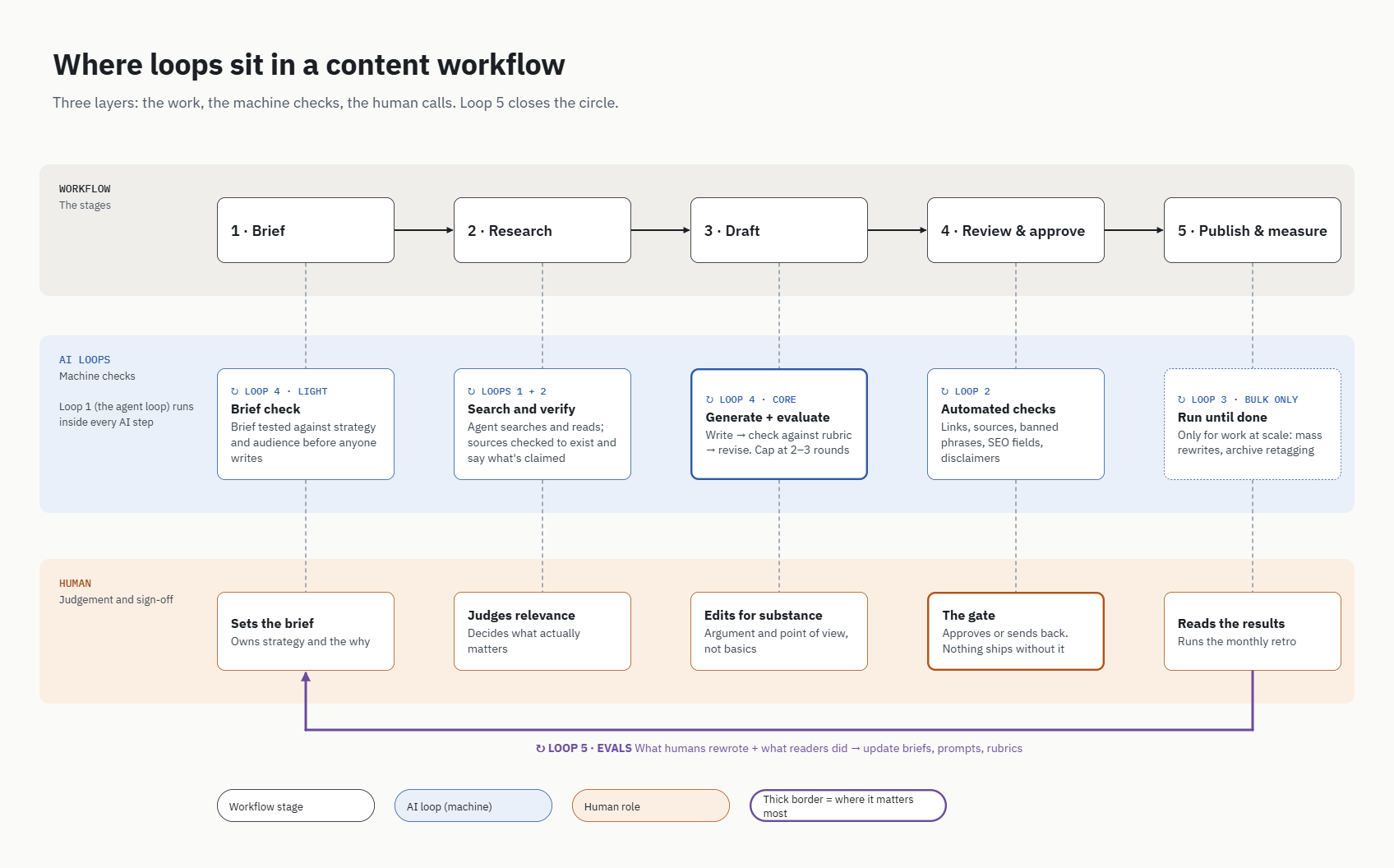
In software, we’re seeing the rise of AI reviewers to pre-screen pull requests, and automated tools that test code before a human sees it. This reduces the burden on human reviewers. I’ve done the same thing with some content. For instance, I’ve built evaluation loops that check my weekly newsletter that summarises AI research published in the past seven days.
The loops weight each study by its source, whether a vendor sponsored it, its sample size and several other factors. They also weed out common AI writing tells. Fail the check and agent revises the output until it clears the bar. I still check and edit the newsletter diligently before it goes out. But a job that took eight hours now takes two.
Time to lean in
Software, data and marketing share something else: we’re comfortable leaning into technology. From the data science slides last night: “The people who build fluency now, who understand the limitations and develop frameworks, are the ones who shape how AI is used”. That’s something that I’m pinning to my desk from now on.
I went last night expecting to be out of my depth. Instead I found people a few months ahead on the same road. They’ve stopped asking whether AI can do the work. They’re asking how to catch what it gets wrong.
They know that coding isn’t solved. Neither is content. The teams that pull ahead won’t be the ones that have swallowed the Kool-Aid. They’ll be the ones who know exactly where their AI breaks and have built the checks to bridge these gaps.